


HISTORY OF THE SMOKIES
Sevierville History
From Cherokee country at the Forks of Little Pigeon to the county seat of Sevier County since 1795.
Cherokee lands Founding Fire and courthouse Downtown grows Modern Sevierville
THE STORY OF SEVIERVILLE
A town where two rivers meet
Sevierville grew up where the West Fork meets the Little Pigeon River, a spot early settlers simply called the Forks of Little Pigeon. Long before that, the river bottoms were part of Cherokee country, crossed by old trails and used for hunting. Settled around 1783 and made the county seat in 1795, Sevierville is the eighth oldest town in Tennessee. Its 1896 courthouse still rises over a downtown of brick storefronts.
1783
About when settlers arrived at the Forks of Little Pigeon.
1795
The year Sevierville became the seat of Sevier County.
1896
The year the courthouse that still stands downtown was finished.
8th
Sevierville is the eighth oldest town in Tennessee.
TIMELINE
Sevierville through the years
Each color marks an era. The same colors are used in the sections below.
CHEROKEE LANDS About 200 A.D. to 1838
About 200 A.D.
Native people build the McMahan Indian Mound just above where the West Fork meets the Little Pigeon.
Late 1600s
The Cherokee are the leading people of the region and use the Sevier County area mainly for hunting.
Dec. 16, 1780
John Sevier’s militia fights Cherokee warriors along Boyd’s Creek in what is now Sevier County.
June 10, 1785
The Treaty of Dumplin Creek opens land south of the French Broad River, including the forks, to settlers.
Nov. 1785
The federal Treaty of Hopewell sets a different boundary, and fighting over the land goes on.
Aug. 1786
The Treaty of Coyatee is forced on the Cherokee.
1838
Most Cherokee people are forced west on the Trail of Tears.
FOUNDING THE TOWN 1783 to 1820
About 1783
Families including the Thomases, Clacks and McMahons settle at the Forks of Little Pigeon.
Nov. 8, 1794
The first territorial court for the new Sevier County meets at Isaac Thomas’s home.
1795
Sevierville becomes the county seat. James McMahon gives 25 acres for the courthouse and town.
Early 1800s
Nancy Academy opens as one of the area’s first schools.
About 1820
The first log courthouse is replaced.
FIRE AND A NEW COURTHOUSE 1850 to 1896
1850
City records describe an 1850 incorporation and a new brick courthouse.
March 1856
Fire destroys the courthouse, nearly all county court records, and much of the town square.
1875
A flood takes out the Harrisburg bridge, and a new covered bridge is built that same year.
1886
New Salem Baptist Church is built by Black congregations with brickmason Isaac Dockery.
July 31, 1895
The county awards the contract for a new courthouse one block south of the old square.
Nov. 10, 1896
The new Sevier County Courthouse is completed.
DOWNTOWN GROWS 1900 to 1942
1900 to 1936
Most of the brick buildings in today’s downtown historic district go up.
1901
The Tennessee Encyclopedia dates Sevierville’s incorporation, with A. M. Paine as mayor, to 1901.
1942
TVA builds Douglas Dam, and 525 families are relocated.
MODERN SEVIERVILLE 1964 to now
1964
Dolly Parton graduates from Sevier County High School.
1970
The courthouse is remodeled.
Oct. 23, 1986
The Sevierville Commercial Historic District is listed on the National Register of Historic Places.
1987
A bronze statue of Dolly Parton by local artist Jim Gray is unveiled on the courthouse lawn.
Aug. 25, 2026
Dolly Parton passes away at 80 in Nashville.

Cherokee lands at the forks
Kuwohi, the highest peak in the Cherokee homeland, seen from Sevierville.
CHEROKEE HISTORY
Cherokee country at the Forks of Little Pigeon
The river bottoms where Sevierville sits were home to native people long before the Cherokee. The McMahan Indian Mound, just above the meeting of the West Fork and the Little Pigeon, dates back as early as about 200 A.D. It was first excavated in 1881, and its artifacts were sent to the Smithsonian. When Spanish explorers came through in the 1500s, the area belonged to a chiefdom called Chiaha.
By the late 1600s the Cherokee, who called themselves the Principal People, were the leading nation of the region. They used the Sevier County area mostly as hunting ground. Two branches of the Great Indian Warpath crossed the county. Traders from Virginia followed these paths into the Cherokee towns, and in the 1780s settlers used the same routes to move into valleys like the forks. Sevierville’s first courthouse, fort and tavern was the home of Isaac Thomas, an Indian trader.
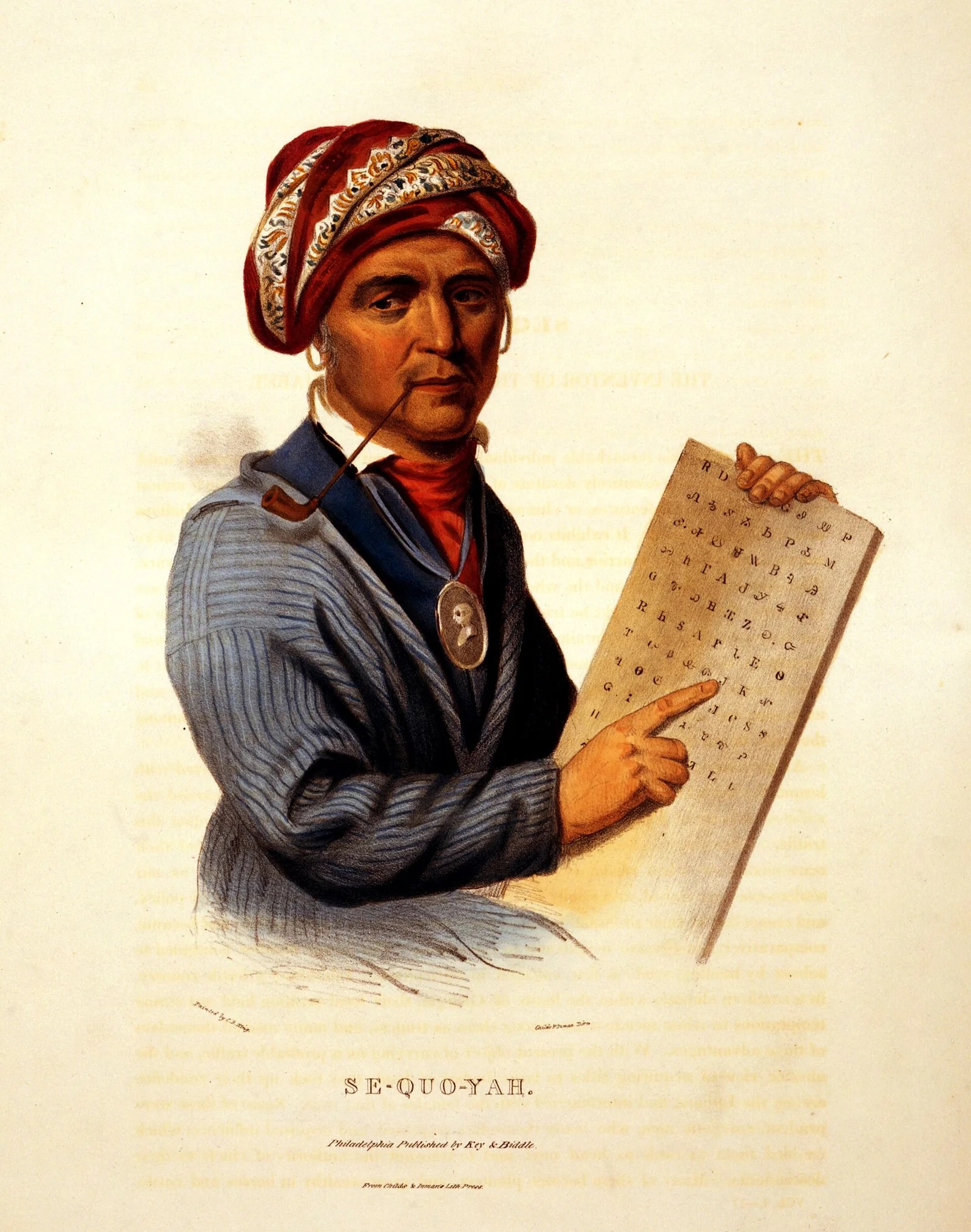
Battles and treaties
The settlers’ arrival meant war over the land. On December 16, 1780, after the Battle of Kings Mountain, John Sevier led about 300 militiamen across the French Broad and fought a Cherokee force on Boyd’s Creek in present Sevier County. The militia killed 28 Cherokee and lost none of their own, then went on to burn Cherokee towns to the south. A stone obelisk put up by the Sons of the American Revolution in 1927 marks the fight. Cherokee towns that kept fighting settlement, often called the Chickamauga, carried the struggle on for years.
In June 1785 the State of Franklin, the breakaway state set up by settlers, met a small number of Cherokee leaders at Maj. Hugh Henry’s station near the mouth of Dumplin Creek on the French Broad. The Treaty of Dumplin Creek, dated June 10, 1785, opened the land south of the French Broad and Holston to settlers, reaching to the ridge between the Little River and the Little Tennessee. The forks of the Little Pigeon fell inside it. It was the only treaty Franklin ever made. The Cherokee leader Old Tassel later said the men who signed it thought they were giving only temporary permission to settle.
Five months later the United States made its own Treaty of Hopewell with the Cherokee. It ignored the Dumplin Creek deal and drew the boundary north of Greeneville. The clash between the two treaties led to open fighting, and in August 1786 Franklin forced the Treaty of Coyatee on the Cherokee. Treaty after treaty pushed the boundary back until, in 1819, the Cherokee gave up their last land in the Tennessee Smokies.
Removal
A small group of Cherokee without the authority of their nation signed the Treaty of New Echota. In 1838 the U.S. government forced nearly 14,000 Cherokee from their homes, and more than 4,000 died on the Trail of Tears.
The Cherokee today
Some Cherokee in the North Carolina mountains were able to stay. Their descendants are the Eastern Band of Cherokee Indians, whose Qualla Boundary is in North Carolina. In 2024 the highest peak in the park officially got back its Cherokee name, Kuwohi, meaning mulberry place.
1783 TO 1820
Founding the Forks of Little Pigeon

Settlers began arriving at the forks around 1783. Among the first families were those of Isaac Thomas, Spencer Clack and James McMahon. When the Southwest Territory created Sevier County in 1794, its first court met in November at Isaac Thomas’s home, which also served as a fort and tavern.
In 1795 the settlement became the county seat and took the name Sevierville, after John Sevier. James McMahon gave 25 acres for the courthouse and town, and the early streets were laid out around a public square. A log courthouse came first and was replaced around 1820. Nancy Academy, one of the area’s first schools, opened in the early 1800s. Sources give different opening years for it, so this page leaves the exact year out.
Did you know? Visit Sevierville spells out how locals say the name: Severe ville, the same way John Sevier said his.
Fire and a new courthouse
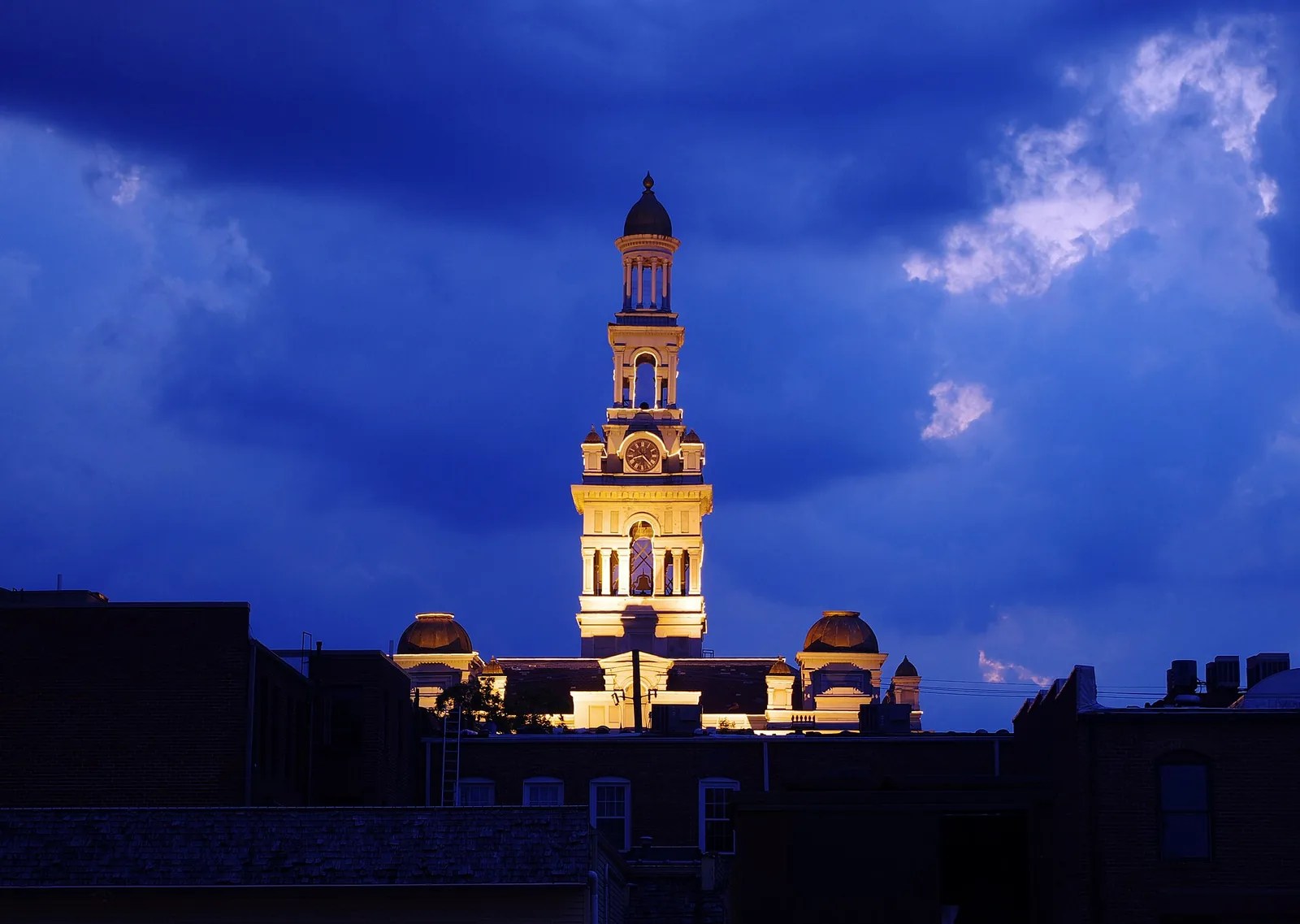
The 1896 Sevier County Courthouse lit up at night. Photo: Brian Stansberry, CC BY-SA 3.0.
1850 TO 1896
The 1856 fire and the courthouse that rose after it
By 1850 Sevierville had a brick courthouse. In March 1856 a fire swept the town square, destroying the courthouse, almost all of the county’s court records, and much of the square around it. The town rebuilt. The courthouse standing today is the county’s fifth.
In 1895 the county chose a site one block south of the old square for a new courthouse and awarded the building contract that July. The building was finished on November 10, 1896, the same year Tennessee turned 100. Designed by the McDonald brothers, it was built with bricks made by Isaac Dockery, a Black brickmason from Sevierville. Some bricks still carry his ID mark. The tower rises about 130 feet and holds a four-sided Seth Thomas clock.
Did you know? Visit Sevierville says the courthouse was the first in Tennessee to be listed on the National Register of Historic Places, in 1976.
1886 TO 1942
New Salem, the covered bridge, and a brick downtown

New Salem Baptist Church was built in 1886 as a Union Church by and for Black congregations, with brickwork by Isaac Dockery. Visit Sevierville calls it the oldest surviving building in Sevierville and the only surviving historic African American church in the county. It is listed on the National Register of Historic Places.
When the new courthouse went up one block south of the old square, businesses followed it. Most of the 24 buildings in today’s Sevierville Commercial Historic District, along Bruce Street, Court Avenue and Commerce Street, were built between 1900 and 1936. Floods on the Little Pigeon helped decide where people could build. The district joined the National Register on October 23, 1986.
East of town, the Harrisburg Covered Bridge has crossed the Little Pigeon River since 1875, when it replaced a bridge lost to a flood that year. It was rebuilt by the Early brothers, is 83 feet long, and is one of only four historic covered bridges left in Tennessee. In 1942 TVA built Douglas Dam on the French Broad, relocating 525 families.


1946 TO 2026
Sevierville’s most famous daughter
Dolly Parton was born on January 19, 1946, the fourth of twelve children, and grew up in the hills near Sevierville. She got her first paying job as a singer at The Pines Theater downtown and graduated from Sevier County High School in 1964. In 1987 her hometown unveiled a bronze statue of her by local artist Jim Gray on the courthouse lawn, and in 1995 she started the Imagination Library.
Dolly Parton passed away in Nashville on August 25, 2026, at the age of 80. Her family asked that people honor her through the Imagination Library. Her statue still stands on the courthouse lawn in the town where she got her start.
WHO’S WHO
People who shaped Sevierville
Isaac Thomas
INDIAN TRADER
An Indian trader and early settler at the forks. His home served as the first courthouse, a fort and a tavern.
James McMahon
TOWN FOUNDER
Early settler who gave 25 acres of land for the courthouse and the new town of Sevierville.
Old Tassel
CHEROKEE LEADER
Cherokee leader who later said the Dumplin Creek signers believed they were granting only temporary permission to settle.
John Sevier
TOWN NAMESAKE
Frontier militia leader, governor of the State of Franklin, and Tennessee’s first governor.
Isaac Dockery
BRICKMASON
Black brickmason from Sevierville whose bricks built the 1896 courthouse and New Salem Baptist Church.
Dolly Parton
1946 TO 2026
Singer, songwriter and Imagination Library founder who grew up near Sevierville and never forgot her hometown.
WHERE TO SEE THIS HISTORY TODAY
Go see it for yourself
All of these are free to see.
Sevier County Courthouse
FREE DOWNTOWN VIEW FROM OUTSIDE
Court Avenue, downtown Sevierville
Look for the clock tower and the brickwork by Isaac Dockery. Take in the building from the lawn and sidewalks.
Dolly Parton Statue
FREE DOWNTOWN
Courthouse lawn, downtown
The 1987 bronze statue of a young Dolly with her guitar, by Jim Gray.

Historic Walking Tour
FREE DOWNTOWN OUTDOORS
Downtown Sevierville
A self-guided walk past the historic downtown buildings, the reimagined Pines Theater, and more.
Sevier County Heritage Museum
FREE INDOORS CLOSED FOR RENOVATIONS
167 Bruce Street, Sevierville
Free museum in the historic post office around the corner from the Dolly statue. It is closed for renovations right now, so check before you go.
Harrisburg Covered Bridge
FREE OUTDOORS SCENIC DRIVE
Off Old State Highway 35 near U.S. 411
The 1875 covered bridge over the Little Pigeon River, still standing and still in use.
Rel and Wilma Maples History Center
FREE INDOORS
King Family Library, Sevierville
The library’s history center holds Sevier County history and family research resources.
SOURCES
Where these facts come from
Every date and number on this page was checked against the free, public sources below. Where sources disagree, the page says so.
- Visit Sevierville: Sevierville history
- Visit Sevierville: Exploring Sevierville’s historic sites
- Visit Sevierville: Uncrowded spots (McMahan Indian Mound, Harrisburg Covered Bridge)
- Visit Sevierville: 10 things to know about Dolly Parton
- Visit Sevierville: Fact sheet
- City of Sevierville: Design Guidelines, history section
- National Register nomination: Sevierville Commercial Historic District
- Sevier County Public Library System: J. A. Sharp, Sevier County’s Court House
- Tennessee Historical Commission marker 1B44, Sevierville (transcription at HMDB)
- Sevier County Government: About Sevier County
- Tennessee Encyclopedia: Sevier County
- Tennessee Encyclopedia: State of Franklin
- Tennessee Encyclopedia: John Sevier
- Tennessee Division of Archaeology: Survey of Revolutionary War sites (Boyd’s Creek, Dumplin Creek)
- UNC Documenting the American South: Treaty at the mouth of Dumplin Creek (1785)
- NCpedia: State of Franklin (Treaty of Hopewell)
- NPS: Cherokee history in the Smokies
- NPS: Smoky Mountain timeline
- NPS: Kuwohi name restored (2024)
- Dolly Parton official announcement (2026)
- Sevier County Heritage Museum
Thinking about calling Sevier County home?
Will Cupp has helped folks buy and sell homes, cabins and land in Sevierville and the Smoky Mountains for more than 30 years. If you have questions about living here, give him a call.
Will Cupp, Realtor and Real Estate Broker, Realty Executives Associates
Photo credits: Sevier County Courthouse (Roc0ast3r, CC0, source); Kuwohi seen from Sevierville (Username11236, CC BY-SA 4.0, source); Sequoyah portrait (Charles Bird King, Public domain, source); John Sevier portrait (Charles Willson Peale, Public domain, source); Sevier County Courthouse at night (Brian Stansberry, CC BY-SA 3.0, source); New Salem Baptist Church (Brian Stansberry, CC BY 3.0, source); Harrisburg Covered Bridge (Brent Moore from Smyrna, TN, CC BY 2.0, source); Douglas Dam construction, 1942 (Alfred T. Palmer, Public domain, source); Court Avenue, Sevierville (Brian Stansberry, CC BY 3.0, source). Images were resized and converted to WebP, and a few old scans were trimmed to remove their borders.


