


HISTORY OF THE SMOKIES
Gatlinburg History
From White Oak Flats and the Ogle family to a settlement school, a crafts tradition, and the doorstep of the national park.
White Oak Flats The Gatlin years Settlement school The park arrives Modern Gatlinburg
THE STORY OF GATLINBURG
A mountain valley called White Oak Flats
Before it was Gatlinburg, this mountain valley was known as White Oak Flats, named for its many tall white oaks. The Ogle family built the first home here in the early 1800s. A storekeeper named Radford Gatlin gave the town its name in 1856. In 1912 a settlement school started by a national women’s fraternity changed the town again, and when the national park opened next door in the 1930s, Gatlinburg became a gateway town to the park.
1807
Martha Jane Huskey Ogle arrives with her children to settle White Oak Flats.
1856
A post office in Radford Gatlin’s store gives the town its name.
1912
The Pi Beta Phi Settlement School opens with 13 students.
1945
Gatlinburg incorporates as a city.
TIMELINE
Gatlinburg through the years
Each color marks an era. The same colors are used in the sections below.
WHITE OAK FLATS Before 1802 to 1850
Before 1819
The mountains around the valley are Cherokee hunting grounds. The Cherokee give up their last Tennessee Smokies land in 1819.
Around 1802
William Ogle of South Carolina picks a homesite in the valley and cuts logs for a cabin. He dies in 1803.
1807
His widow, Martha Jane Huskey Ogle, arrives with five sons, two daughters and her brother Peter Huskey.
June 1837
White Oak Flats Baptist Church is formally organized. It is now First Baptist Church of Gatlinburg.
THE GATLIN YEARS 1854 to 1865
1854
Radford C. Gatlin arrives and opens a general store.
1856
A post office opens in Gatlin’s store, and the town becomes Gatlinburg.
1861 to 1865
Raiders from both sides strike the area during the Civil War, and one skirmish is fought in Gatlinburg.
THE SETTLEMENT SCHOOL 1910 to 1933
1910
Pi Beta Phi, the first national women’s fraternity, picks a settlement school as its national service project.
March 1912
The Pi Beta Phi Settlement School opens with 13 students and teacher Martha Hill.
1914
A new six room schoolhouse serves 75 pupils.
1916
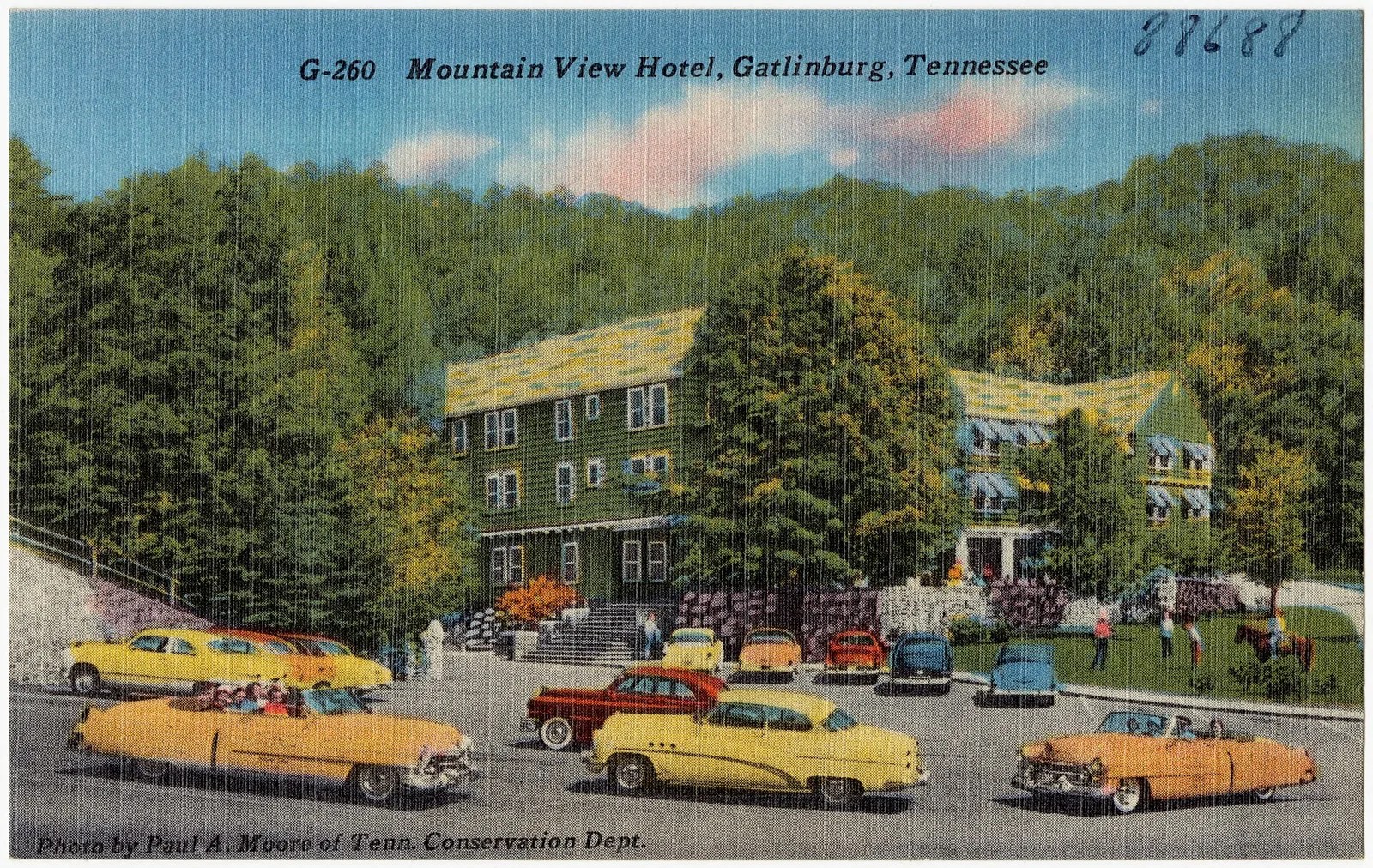
Andy Huff opens the Mountain View Hotel.
1926
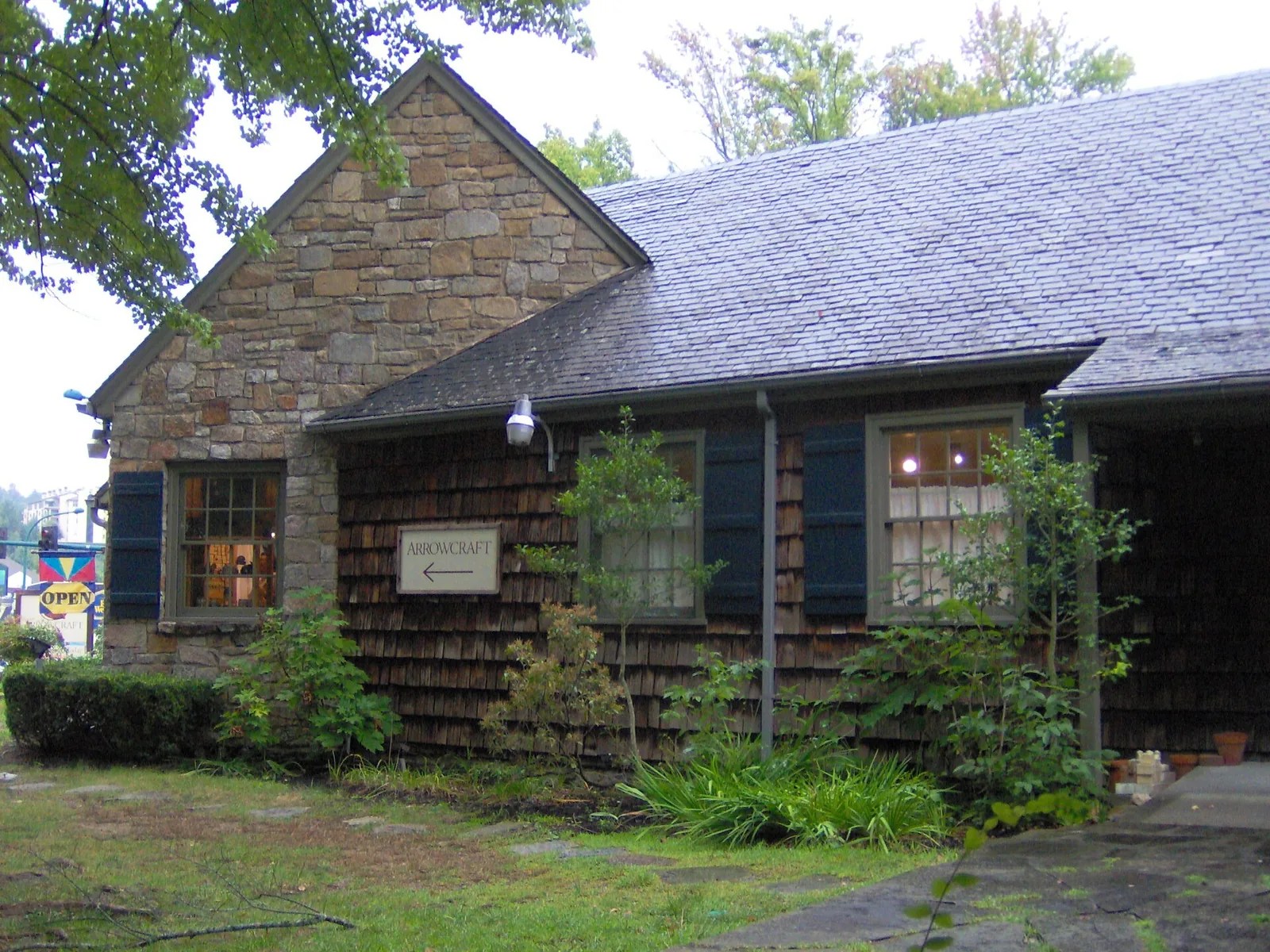
Arrowcraft begins selling local weaving and crafts, and Jack and Pauline Huff open LeConte Lodge.
THE PARK ARRIVES 1934 to 1948
1934
Great Smoky Mountains National Park is established next to town.
1937
Woodcarver John Cowden and others move their craft shops out to the Glades, and R. L. Maples builds the Gatlinburg Inn.
1940
A new Arrowcraft shop opens as park visitors arrive.
1945
Gatlinburg incorporates, with Dick Whaley as mayor. Pi Beta Phi and the University of Tennessee hold their first summer craft workshop.
1948
The first Craftsman’s Fair of the Southern Highlands is held at the Pi Beta Phi School.
MODERN GATLINBURG 1954 to now
1954
The Maples family opens the town’s first chairlift.
1964 to 1970
Pi Beta Phi launches Arrowmont School of Arts and Crafts, and in 1965 the county takes over the public school.
Nov. 2016
Wildfires reach Gatlinburg and the surrounding hills, and 14 people in the area lose their lives.
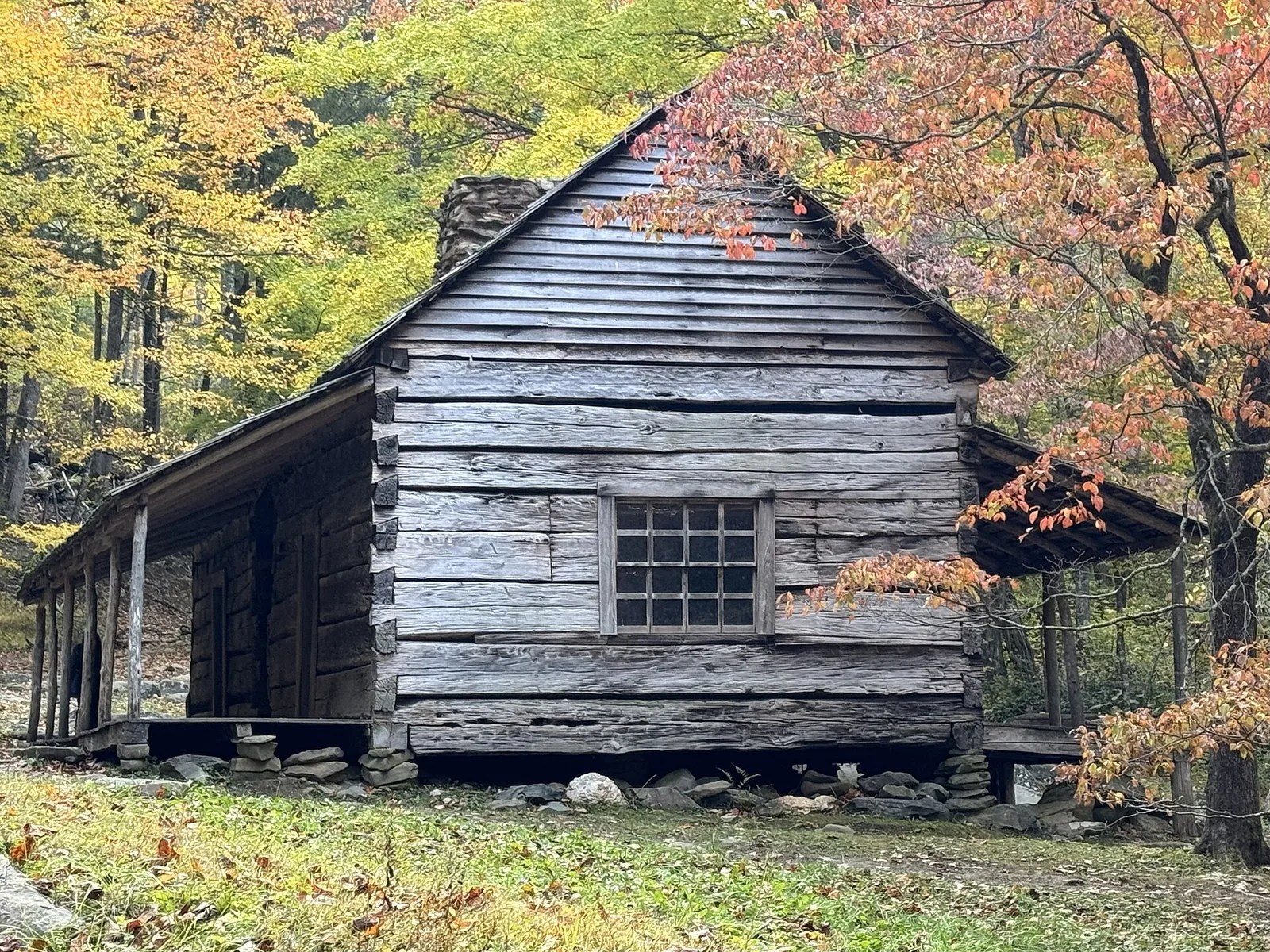
White Oak Flats
Mountain farm life near Gatlinburg: the Noah Bud Ogle cabin in the national park. Photo: Missvain, CC BY 4.0.
BEFORE 1802 TO 1850
The Ogles of White Oak Flats
The Smokies around this valley were Cherokee hunting grounds for generations, and the Cherokee did not give up their last land in the Tennessee Smokies until 1819. Around 1802 William Ogle, a South Carolinian, chose a homesite here and cut and hewed logs for a cabin. He fell ill and died in 1803 before he could bring his family.
His widow, Martha Jane Huskey Ogle, did not give up on the plan. In 1807 she came to the valley with her five sons, two daughters and her brother Peter Huskey and his family. Their cabin, the first home in what became Gatlinburg, still stands downtown. Other families followed, including the McCarters, Reagans, Whaleys and Trenthams. In 1837 they formally organized White Oak Flats Baptist Church.
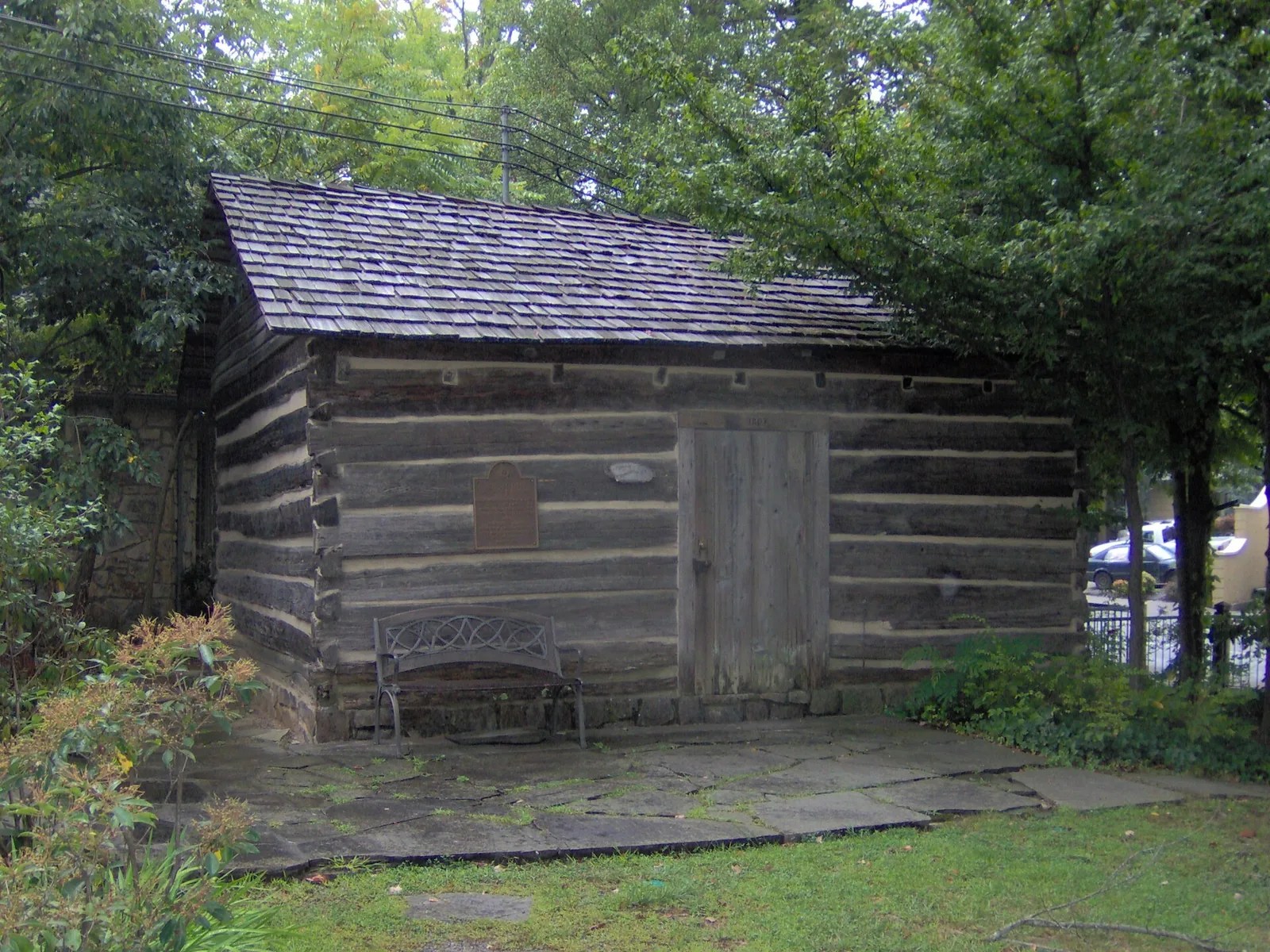
Did you know? William Ogle is said to have called this valley the Land of Paradise.
1854 TO 1865
Radford Gatlin and a new name
Radford C. Gatlin came to White Oak Flats in 1854 and opened the community’s second general store. When a post office opened in his store in 1856, the town took his name: Gatlinburg.
Gatlin did not stay popular. He clashed with his neighbors over church matters, and he was a Democrat in a mostly Republican community. He was eventually pushed out of town, but the name stuck. During the Civil War raiders from both sides struck the area, and one skirmish was fought in Gatlinburg itself.
Did you know? The town kept Radford Gatlin’s name even after the community forced him to leave.
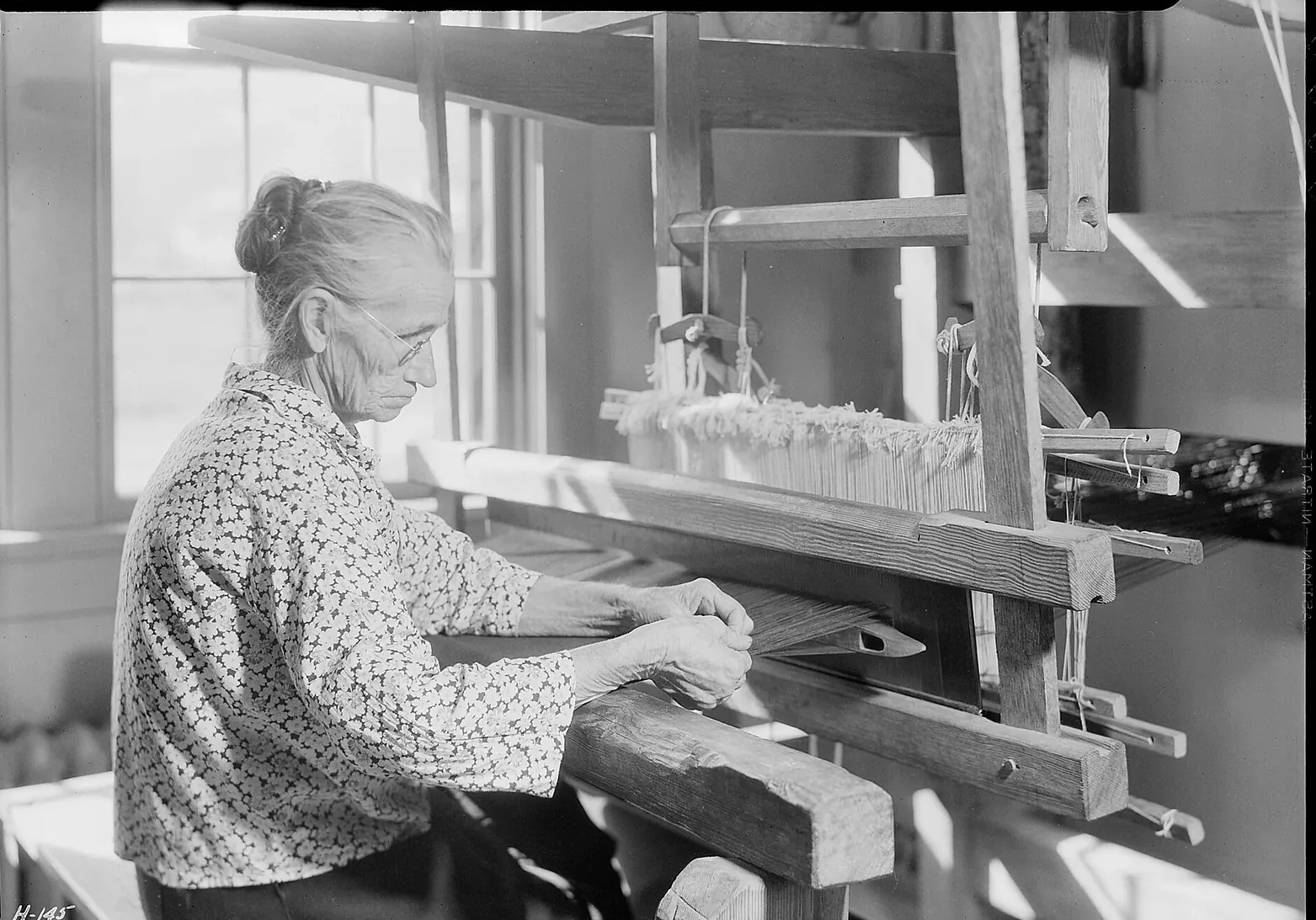
The settlement school
Aunt Lizzie Reagan weaving at the Pi Beta Phi School in 1933. Lewis Hine, public domain.
1910 TO 1933
Pi Beta Phi comes to the mountains

In 1910 Pi Beta Phi, the first national women’s fraternity, chose to open a settlement school in the mountains as its national service project. The Pi Beta Phi Settlement School opened in Gatlinburg in March 1912 in an unused church building, with 13 students and teacher Martha Hill of Nashville. By 1914 it had a new six room schoolhouse and 75 pupils. The school also brought nursing care to the community.
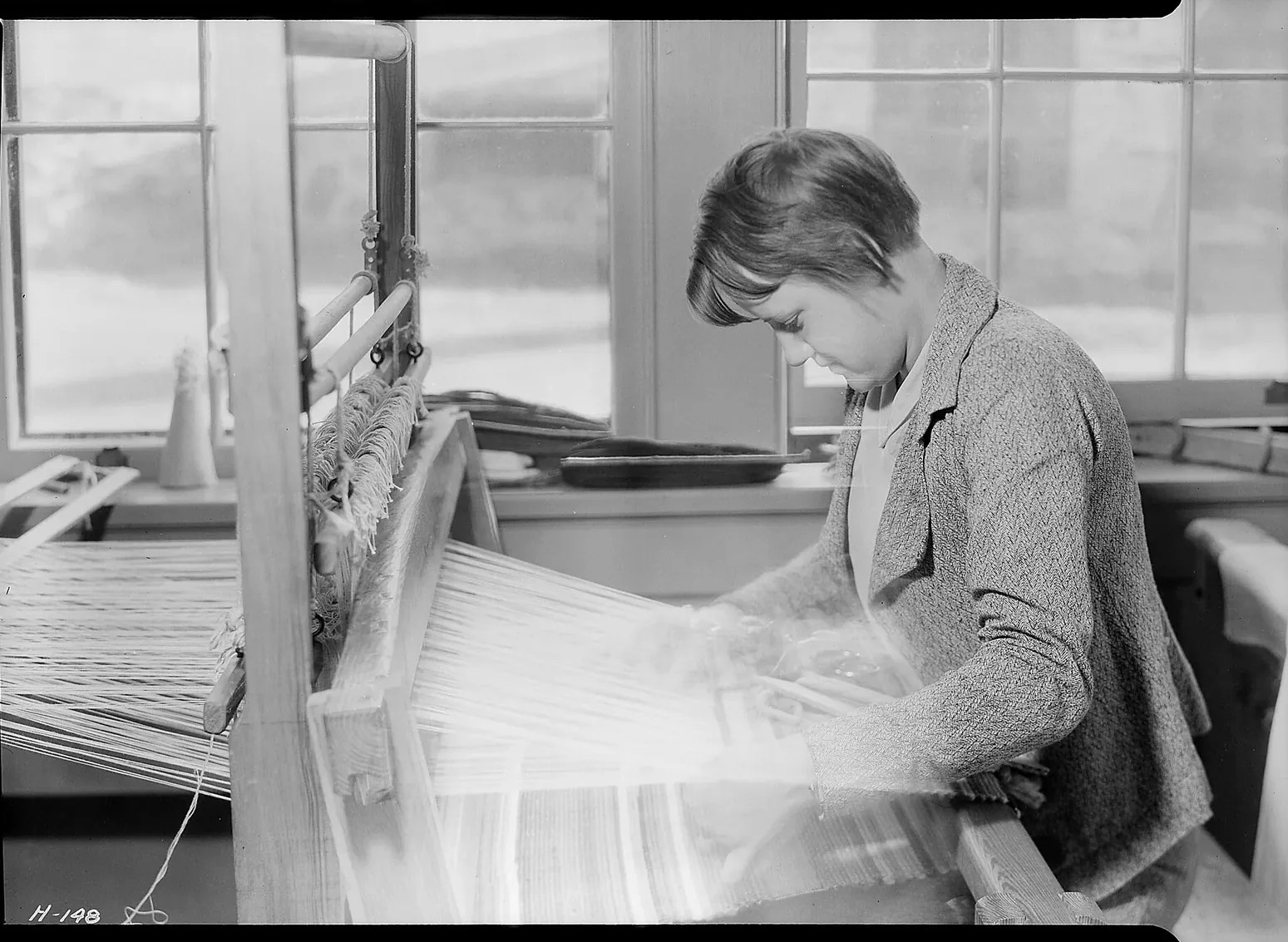
The school encouraged local weavers, basket makers and woodworkers. In 1926 their work began selling under the name Arrowcraft, and it was marketed across the country. That craft work helped make Gatlinburg known as a home for mountain crafts.
Tourism was starting too. Andy Huff opened the Mountain View Hotel in 1916, and in 1926 his son Jack and Jack’s wife Pauline opened LeConte Lodge on Mount Le Conte.

The park arrives
Riders on the Gatlinburg chairlift on an old postcard. Public domain.
1934 TO 1948
Gateway to the Smokies
When Great Smoky Mountains National Park was established in 1934, Gatlinburg sat right at its edge. Some families who had to leave their land inside the new park moved into town. Hotels, shops and craft stores followed the visitors. R. L. Maples built the Gatlinburg Inn in 1937, and years later Felice and Boudleaux Bryant wrote the song Rocky Top there. In 1940 a new Arrowcraft shop opened to serve the growing crowds.
Around 1937 woodcarver John Cowden and several other craftspeople moved their shops out of downtown to the Glades, where many of them lived. Carl Huskey’s Village Craft Shop followed. That was the start of what is now the Great Smoky Arts and Crafts Community, an 8 mile loop along Glades Road, Buckhorn Road and U.S. 321.
Gatlinburg incorporated as a city in 1945, with Dick Whaley as its mayor. That same year Pi Beta Phi and the University of Tennessee held their first summer craft workshop, and in 1948 the school hosted the first Craftsman’s Fair of the Southern Highlands.
Did you know? The Gatlinburg visitors bureau says the Great Smoky Arts and Crafts Community is the largest group of independent artisans in North America.
1954 TO NOW
Chairlifts, Arrowmont, and coming back strong
The Maples family opened Gatlinburg’s first chairlift in 1954. In 1964 Pi Beta Phi voted to start a year round arts and crafts school, and the county took over the public school in 1965. The craft school was formally named Arrowmont School of Arts and Crafts by 1970, and it still teaches artists in Gatlinburg today.
In November 2016 wildfires swept out of the park and into Gatlinburg and the hills around it. The fires took 14 lives across the area and damaged or destroyed about 2,460 buildings. The town and its neighbors rebuilt together, helped by donations such as Dolly Parton’s My People Fund.
WHO’S WHO
People who shaped Gatlinburg
Martha Jane Huskey Ogle
FIRST SETTLER
Widow who carried out her late husband’s plan and brought her family to White Oak Flats in 1807.
William Ogle
PICKED THE HOMESITE
South Carolinian who chose the valley around 1802 and cut logs for the family cabin before he died in 1803.
Radford C. Gatlin
STOREKEEPER
Storekeeper whose 1856 post office gave Gatlinburg its name, even though he was later forced out.
Martha Hill
FIRST TEACHER
Nashville teacher who opened the Pi Beta Phi Settlement School in 1912 with 13 students.
Andy, Jack and Pauline Huff
HOTEL FAMILY
Andy Huff opened the Mountain View Hotel in 1916. His son Jack and Jack’s wife Pauline opened LeConte Lodge in 1926.
John Cowden
WOODCARVER
Woodcarver who helped start the Glades craft community around 1937 by moving his shop out of downtown.
WHERE TO SEE THIS HISTORY TODAY
Go see it for yourself
These are free to visit. Inside the national park, a parking tag is required for any vehicle parked longer than 15 minutes.
Ogle Cabin
FREE DOWNTOWN VIEW FROM OUTSIDE
Downtown Gatlinburg, in front of the McMahan Parkway parking garage
The log home Martha Jane Ogle’s family built in the early 1800s, the oldest home in town.
Arrowmont Galleries
FREE INDOORS
556 Parkway, Gatlinburg
Free galleries at Arrowmont, which grew out of the Pi Beta Phi school, including a History Gallery with photos, baskets and textiles from the settlement school days.
Great Smoky Arts and Crafts Community
FREE SCENIC DRIVE
Glades Road, Buckhorn Road and U.S. 321
Drive the 8 mile loop and stop in at studios where artisans carry on the craft tradition that began here around 1937. Browsing is free.
Noah Bud Ogle Place
FREE OUTDOORS PARKING TAG
Off Historic Nature Trail Road at traffic light #8
A self-guided nature trail through an old mountain farmstead and hardwood forest. Parking tags are not sold here, so get one before you go.
Sugarlands Visitor Center
FREE INDOORS PARKING TAG
Inside the park near Gatlinburg
Pick up a park map, get your questions answered, and plan your history stops in the Smokies.

Elkmont Historic District
FREE OUTDOORS PARKING TAG
Off Little River Road
The old logging town and resort cabins of Daisy Town, a short drive from Gatlinburg through the park.
SOURCES
Where these facts come from
Every date and number on this page was checked against the free, public sources below. Where sources disagree, the page says so.
- Gatlinburg Convention and Visitors Bureau: History and culture
- Gatlinburg Convention and Visitors Bureau: Explore Gatlinburg’s most historic places
- Gatlinburg Convention and Visitors Bureau: 75th anniversary
- Tennessee Encyclopedia: Pi Beta Phi Settlement School
- Tennessee Encyclopedia: Arrowmont School of Arts and Crafts
- Tennessee Encyclopedia: Appalachian Decorative Arts
- Tennessee Encyclopedia: Sevier County (Gatlinburg)
- MTAS, University of Tennessee: Gatlinburg
- Great Smoky Arts and Crafts Community: History
- Arrowmont: Galleries
- NPS: Cherokee history in the Smokies
- NPS: Smoky Mountain timeline
- NPS: Chimney Tops 2 Fire
- Tennessee General Assembly: House Joint Resolution 23 (2017) on the 2016 wildfires
- NPS: Roaring Fork Motor Nature Trail and Noah Bud Ogle trail
- NPS: Fees and parking tags
Thinking about calling Sevier County home?
Will Cupp has helped folks buy and sell homes, cabins and land in Sevierville and the Smoky Mountains for more than 30 years. If you have questions about living here, give him a call.
Will Cupp, Realtor and Real Estate Broker, Realty Executives Associates
Photo credits: Gatlinburg street scene postcard (Pub. by Standard Souvenirs & Novelties, Inc., Knoxville, Tenn., Public domain, source); Noah Bud Ogle cabin (Missvain, CC BY 4.0, source); Ogle Cabin, Gatlinburg (Brian Stansberry, CC BY 3.0, source); Aunt Lizzie Reagan weaving, 1933 (Lewis Hine, Public domain, source); Woodcrafters and Carvers shop, 1933 (Lewis Hine, Public domain, source); Marie Clabo at the Pi Beta Phi School, 1933 (Lewis Hine, Public domain, source); Mountain View Hotel postcard (Pub. by The Asheville Post Card Co., Asheville, N. C., Public domain, source); Gatlinburg chairlift postcard (Pub. by The Asheville Post Card Co., Asheville, N. C., Public domain, source); Arrowcraft Shop (Brian Stansberry, CC BY 3.0, source); Appalachian Clubhouse, Elkmont (Brian Stansberry, CC BY 3.0, source). Images were resized and converted to WebP, and a few old scans were trimmed to remove their borders.


